
Who persuaded the parents? What India’s vaccine drive can learn from pharma marketing
India’s HPV vaccine drive passed 80 lakh girls in six months, and nobody can say which knock on the door, school meeting or WhatsApp message did the work. Drug companies answer that question about doctors every quarter. Public health should borrow the method.
About this essay. The three people in the opening scenes are composites, and so is their district. Every number is real and sourced at the end. Where we infer or illustrate rather than report, we say so.
Monday morning: the medical rep
At 9.40 on a Monday, a medical representative we will call Rohit parks his scooter outside a gynaecologist’s clinic in a district town in north India. Before he walks in, he checks in on his phone. The app knows which doctor this is, how often he has visited this month, and which two brands he should mention first.
The call lasts four minutes. When he leaves, he logs it: two brands discussed, one reminder item left, a follow-up date. By Friday the call is a row in a dashboard at head office. By the end of the quarter it is a data point in an analysis that asks what a fourth visit to a gynaecologist in a district like his is worth, compared with a third visit, a webinar or a medical conference.
Monday afternoon: the ASHA
Forty minutes away, Sunita, an ASHA, the community health worker every Indian village is meant to have, is walking through her village with a list of eleven girls who turned fourteen this year. Her job this spring is to persuade their parents to take them to the government health centre for a free injection that protects against cervical cancer.
At the third house, the mother has seen a WhatsApp video saying the injection makes girls infertile. The grandmother remembers something about girls who died. Sunita stays twenty minutes. The mother says she will think about it.
If the girl is vaccinated next week, the dose will be logged on U-WIN, the government’s vaccination platform. The twenty minutes that produced it will not be logged anywhere.
Friday: the district officer
On Friday, the district immunisation officer, Dr Anjali, joins the state’s weekly review on a video call. Her district is shown in red, at 31% of its target. The neighbouring district is green, at 88%.
She is asked what she will do differently. She has spent her publicity budget on hoardings, wall paintings, a loudspeaker van and radio spots, and has written to every school. She has no way to tell which of those did anything, or why the next district is ahead. Was it the schools there? The exam calendar? A rumour that reached her villages first? The meeting ends, as these meetings often do, with an instruction to intensify awareness activities.
Three people spent the week persuading. One works in an industry that measures persuasion to the rupee. The other two work for a programme that barely measures it at all.
India knows, to the rupee, what it costs to persuade a doctor. It has almost no idea what it costs to persuade a parent.
The biggest product launch of 2026
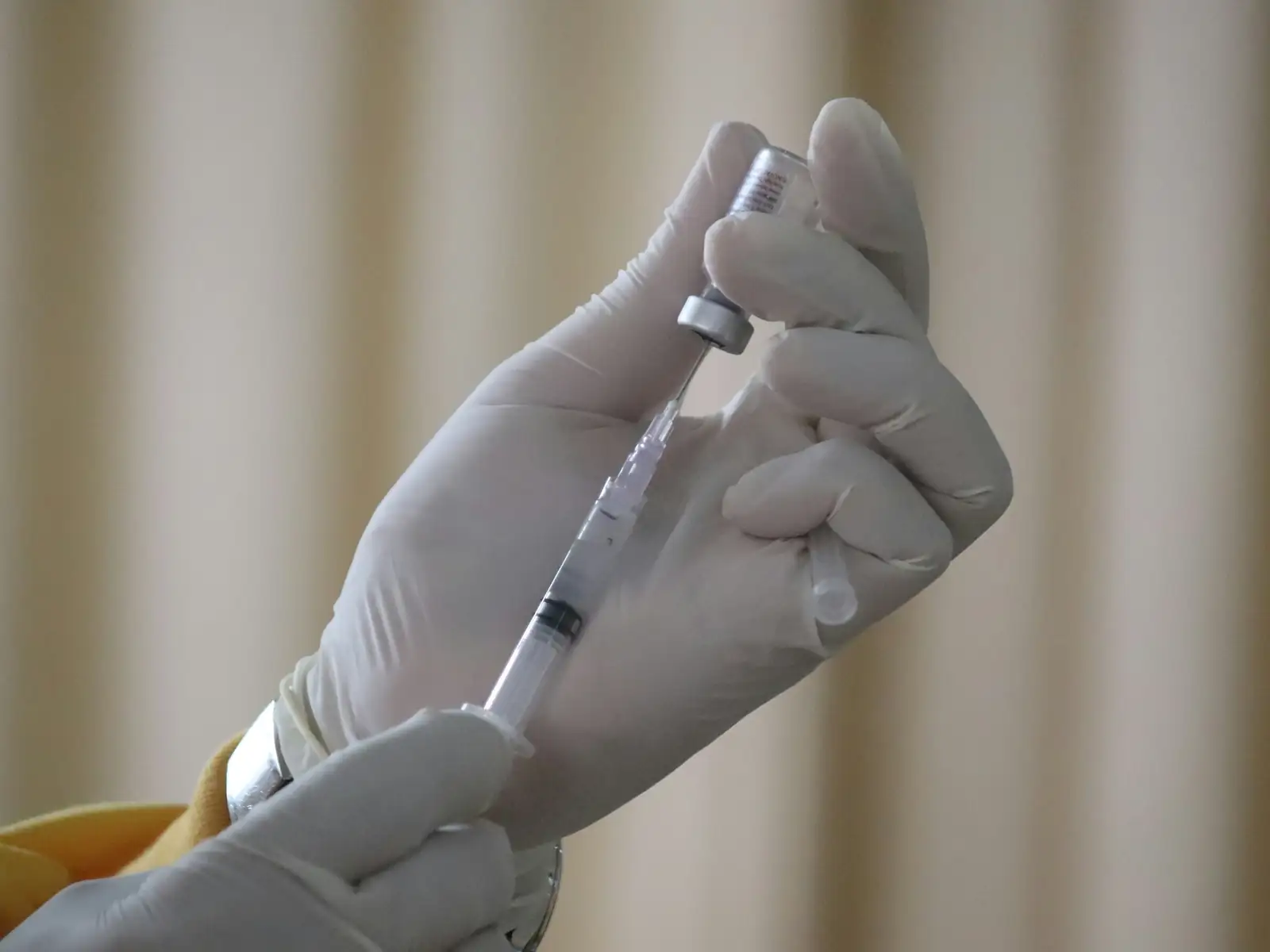
On 28 February 2026, the Prime Minister launched, from Ajmer, a national campaign to give every girl aged 14 a single free dose of the HPV vaccine, which protects against the virus behind most cervical cancer. The vaccine is MSD’s Gardasil-4. The target is about 1.15 crore girls a year. The dose is voluntary, needs a parent’s consent, and is given only at government facilities: Ayushman Arogya Mandirs, community health centres, district hospitals and medical colleges.
The stakes are large. India recorded about 127,500 new cases of cervical cancer and 79,906 deaths in 2022, roughly one in five of the world’s cases and nearly one in four of its deaths. The World Health Organization has endorsed a single-dose schedule for girls since 2022, which makes a campaign like this simpler than it used to be.
By 11 September, the health ministry reported more than 80 lakh doses. Gujarat, Uttar Pradesh, Madhya Pradesh and Mizoram were at 100% of their “identified targets”, and Uttar Pradesh alone had vaccinated more than 22 lakh girls. Our own arithmetic puts the national total at about two-thirds of one year’s cohort.
The averages hide a wide spread. West Bengal began its own drive on 30 May for more than 7.5 lakh girls. By early July it had reached about a quarter of them, and moved its camps onto school premises. In Nagpur, the municipal corporation had vaccinated about 12% of its target by mid-May, and officials blamed rumours about infertility. In Ludhiana, a drive launched on 5 March with a target of 40,000 girls had vaccinated 825 when it was extended by another 90 days. The district’s immunisation officer partly blamed the school exam season. Officials then credited workshops in schools and sessions at parent-teacher meetings when daily numbers rose to 225 and 300.
A brand manager would recognise all of this at once. This is a product launch: a new product, a defined audience, national distribution and a sales target. Every question a marketer asks after a launch applies. Which channels drove trial? Where did the message fail? What did the competition do? And where would the next rupee do the most good?
The competitor nobody models
The vaccine has a competitor, and it is sixteen years old. In 2009, a demonstration project run by the health charity PATH with the Indian Council of Medical Research and two state governments vaccinated about 23,000 girls aged 10 to 14 in Khammam, in what was then Andhra Pradesh, and Vadodara in Gujarat. Seven of the girls died in the months that followed. An official inquiry found the deaths “most probably unrelated” to the vaccine: the causes included drowning, snakebite, pesticide poisoning and malaria.
The project had already been suspended, in April 2010. In 2013, a parliamentary committee called it a clinical trial presented as a demonstration project, and criticised the research council and the drug regulator. PATH rejected those findings. The Observer Research Foundation has described how the 2026 launch set off a fresh wave of social-media posts recirculating the committee’s report, and argued that the story persists because officials never clearly communicated the inquiry’s conclusions.
In marketing terms, the vaccine is up against a rival with a strong emotional hook, a sixteen-year head start and free distribution on every phone in the country. A brand team would track that rival’s share of voice, week by week and district by district, and estimate what it does to sales. The programme mostly treats it as background noise, and answers it with myth-busting workshops, one district at a time.
What pharma knows that public health doesn’t
Indian drug companies became expert at measuring persuasion partly because the law left them little choice. Prescription medicines cannot be advertised to the public without the central government’s prior sanction, and a draft rule published in September 2026 would extend that bar to retailers and wholesalers. So prescription brands are sold through doctors and chemists, and over-the-counter brands through mass media. Personal healthcare products made up about 7% of television advertising volume in 2025.
The industry is also unusually well measured. Monthly audits track what chemists across the country sell, molecule by molecule; Pharmarack put the market at ₹2,40,672 crore in 2025. Large companies run field forces of thousands. Sun Pharma, India’s largest drugmaker, had about 11,000 medical representatives and related staff in 2022. They typically manage those forces with apps, dashboards and models of how sales respond to promotion. Few companies publish those models, but they are the reason a brand manager can say, with some confidence, which doctors and districts deserve another visit.
This is not a hymn to pharma marketing. The government’s Uniform Code for Pharmaceutical Marketing Practices, notified in March 2024, bans gifts to doctors, caps brand reminder items at ₹1,000 and requires companies to disclose what they spend on medical education events. On 8 October 2026, the Supreme Court declined to make that code legally binding, but directed the government to set up an expert committee on an enforceable framework, saying the existing one had not been entirely effective. The point is not to copy pharma’s ethics. It is to copy its measurement.
That measurement has a name: the marketing-mix model. At heart it is a careful regression. It takes sales, week by week and region by region, and asks how much of them is explained by each thing the company did, such as reps’ visits, advertising and discounts, and how much by things it did not control, such as season, weather and competitors. Two ideas make it more than a correlation. Effects carry over: a television advertisement keeps working for weeks after it airs. And returns diminish: the tenth advertisement in a week does less than the first. Out of the model comes the question every finance director wants answered: where would the next rupee do the most? Our guide to measuring marketing returns explains where these models fit alongside attribution and experiments.
Diminishing returns
Carryover
On the left, the chance a girl is vaccinated rises with each visit to her home, but each visit adds less. On the right, one school meeting keeps producing doses for weeks. The numbers are invented to show the shapes.
None of this needs a software budget any more. Google released its open-source model, Meridian, to everyone in January 2025, built to compare many regions at once. Meta has published its own, Robyn, since 2021. Governments have started to use the method too. The UK government’s communications analysts describe econometrics as what the private sector calls marketing-mix modelling, and built an in-house model of how the UK’s COVID vaccine campaign affected people’s willingness to be vaccinated. In the US, an econometric evaluation of a federal anti-smoking campaign estimated that it cost $393 for every year of life it saved. We could find few, if any, published marketing-mix models of a vaccination programme anywhere.
What an Indian HPV mix model would contain
A model built for India would look different from one built for a soap brand in Mumbai, or a vaccine campaign in Britain. The levers are Indian, and so is the weather.
- Doses per facility per week, from U-WIN
- Girls aged 14 in each block, from school enrolment and census estimates
- Refusals and deferrals, where they are recorded
- ASHA home visits and the hours spent on them
- School workshops and parent-teacher meetings
- Session days and opening hours at facilities
- Hoardings, wall paintings, radio, TV, SMS and WhatsApp
- Doctors, teachers, religious leaders and local politicians who speak up
- Exams, school holidays and festivals
- Harvests, migration, heat and monsoon
- Rumours and news of reactions after vaccination
- Stock-outs and staff shortages
Three features would make it distinctly Indian.
It would take the calendar seriously. Ludhiana’s immunisation officer, in blaming the exam season, was describing a seasonal effect that every Indian marketer of school bags, coaching classes and soft drinks already models. A health model that ignores the school calendar will blame the ASHAs for March.
It would let districts differ. India’s own HPV history shows how much the channel matters. When Punjab ran a school-based programme in Bathinda and Mansa in 2016, more than 97% of the targeted girls were vaccinated. Sikkim’s school campaign in 2018 reached more than 95%, and its evaluation credited political commitment, cooperation between the health and education departments, and social mobilisation. Delhi’s hospital-based programme, launched the same month as Punjab’s, had given about 1,200 doses by March 2017. Modern mix models are built in layers, so each district gets its own estimates while smaller districts borrow strength from similar ones. That suits a country where a district on the Gangetic plain and a hill district in the north-east will not respond to the same poster.
It would learn from this year’s improvisation. States and districts changed tactics mid-campaign. West Bengal moved camps into schools in July, and Ludhiana added school workshops and parent-teacher sessions. Each switch, dated and located, is exactly what a model learns from. Most of the data already exists. U-WIN, launched nationally in October 2024, records every vaccination event with its session site and date, and by November 2024, counting its pilot phase, had recorded 27.77 crore doses. ASHA incentive claims, district publicity budgets and school calendars all sit in some government system. In our reading, the missing piece is not data but someone whose job is to join it up.
India has done this before
None of this is foreign to India. In some ways India got here first.
Nirodh, 1968. India launched a contraceptive social-marketing programme under the Nirodh brand, the first country to do so, according to the UN Population Fund. The idea came from a team at IIM Calcutta, and the government asked Hindustan Lever, Brooke Bond, ITC, Tata Oil Mills and Union Carbide to carry condoms through the same networks that carried soap and tea. That was three years before two American professors, Philip Kotler and Gerald Zaltman, gave “social marketing” its name. Nirodh’s sales later stagnated for years, a reminder that distribution alone is not enough.
Polio, 2003 to 2011. In the hardest parts of Uttar Pradesh and later Bihar, UNICEF and its partners built a social mobilisation network of several thousand community mobilisers, almost all women. Each covered about 500 households and tracked every child under five. They marked houses, revisited the ones that had refused, and enlisted religious and local leaders. According to UNICEF and its partners, refusals, which had reached up to 20% in some communities, fell below 1%. India’s last case of wild polio was in Howrah on 13 January 2011. That operation had everything a modern sales team has: a field force, a customer database, influencer outreach and a daily feedback loop.
Udaipur, 2010. Economists including Abhijit Banerjee and Esther Duflo ran a randomised trial with the NGO Seva Mandir across 134 villages in Rajasthan. Full immunisation was 6% in villages with no change, 18% where reliable monthly camps were held, and 39% where families also received a kilogram of lentils at each visit and a set of plates at the end. Because the incentive camps vaccinated more children, spreading the fixed cost of each camp, the cost per fully immunised child fell by half, from $55.83 to $27.94. In marketing terms, a small price promotion paid for itself.
Haryana, 2016 to 2018. Banerjee, Duflo and colleagues then worked with the Haryana government on what is, in effect, a marketing-mix experiment. Across 2,360 villages in seven districts and about 295,000 children, they cross-randomised 75 combinations of mobile-phone credit incentives, SMS reminders and local “ambassadors”, including villagers whom neighbours named as good at spreading news. The best combination raised immunisations by 44%. The most cost-effective, ambassadors plus reminders with no incentives, delivered 9.1% more immunisations for the same money. Neither reminders nor incentives worked well on their own. Any brand manager could have predicted the lesson: channels interact.
The government’s own Intensified Mission Indradhanush raised full immunisation by 18.5 percentage points in 190 low-coverage districts and urban areas in 2017–18. India clearly knows how to run demand campaigns and how to test them. What it has not done is turn one-off studies into a habit: a standing model, refreshed every month, that tells each district officer where the next rupee and the next hour of an ASHA’s time will do the most good.
Seven ways India mismeasures persuasion
- 1It counts activity, not effect. Reviews ask how many hoardings went up and how many meetings were held, not how many parents changed their minds because of them.
- 2It pays for the paperwork. ASHAs receive a fixed ₹3,500 a month from the central government, plus state top-ups and payments for completed tasks, such as ₹100 for each infant fully immunised in its first year. In Karnataka, workers must enter data in an app to receive central incentives. The visit that persuades but has not yet produced a jab is invisible.
- 3It marks its own homework. States set their own “identified targets”. A 2026 government release put full immunisation at 98.4% from administrative records. The national household survey, covering 2023–24, found 87.1% by vaccination card.
- 4It plans once a year. Publicity money is approved a year ahead in state and district health plans, programme by programme, and is hard to move when a rumour breaks in one block.
- 5It writes one script for 700 districts. The same posters and jingles go everywhere, although Punjab’s schools and Delhi’s hospitals produced utterly different results with the same vaccine.
- 6It ignores the competition. Rumours are usually answered once they show up in the numbers, when a marketer would have been tracking them from the start.
- 7Its data never meets. Doses, ASHA payments, publicity budgets and school calendars sit in separate systems, owned by different people. This is our reading, and the fix is organisational, not technical.
What it means for you
- 1A parent of a 14-year-old girl. The dose is free at government facilities and needs your consent. If something you have heard worries you, ask the doctor at the facility, not the forward.
- 2An ASHA or health worker. Your conversations are the most valuable and least counted work in the programme. A model that credits them is the strongest argument for paying for them properly.
- 3A district officer. Write down what you did, where and when. Try one new channel in some blocks and not others. You will learn more in a month than a year of reviews will tell you.
- 4A health ministry or state official. Publish dose counts by block and week, join them to spending, and fund a small team to model them.
- 5A pharma leader or CSR head. Preventive health care is an eligible CSR activity. Lend analysts, not banners. A seconded data scientist may do more for the campaign than another hoarding with your logo.
- 6A data person. The tools are free. The hard parts are joining the data, setting sensible assumptions, and admitting what the model cannot tell you.
Why it could go badly wrong
The model can confuse cause and effect. If ASHAs are sent to the blocks with the lowest uptake, a naive model will conclude that ASHA visits lower uptake. Marketers face the same trap whenever they spend most where sales are weakest. The cure is experiments: switch a channel on in some places and not others, at random, and use the result to anchor the model. It can be done for health. A randomised trial in the US that showed doctors’ and nurses’ videos on Facebook in some areas and not others found 3.5% fewer COVID infections where they ran. A study of 689,693 pharmacy customers tested 22 text reminders and found they raised flu vaccination by 2 percentage points on average. During the pandemic, 174 public-health organisations ran 819 randomised experiments on their own Facebook and Instagram advertising. Without experiments, evaluations of the same event can disagree completely: studies of Ohio’s million-dollar vaccine lottery in 2021 ranged from no effect to about one extra percentage point.
The data can lie. When targets drive careers, reported numbers drift upwards, as the gap between administrative and survey coverage shows. A model trained on inflated numbers will confidently credit the wrong things. Household surveys, and the World Health Organization’s surveys of why people do or do not vaccinate, should be used to check it.
The model will favour the easiest doses. A mix model maximises results for the money, and the cheapest doses are in places that are already converting. The hardest girls to reach, those out of school, in migrant families or in communities with deep mistrust, are expensive. Polio taught India that the last children matter most: in Uttar Pradesh in 2010, 4.1% of migrant children were missed by vaccination campaigns, against 2.2% of children generally. A model has to be told that the last girl counts as much as the first. That is a value judgement, and it belongs to the health ministry, not the analyst.
Targets can bend consent. The HPV dose is voluntary and needs a parent’s consent. Any model, target or incentive that rewards doses obtained under pressure would damage the programme’s credibility, and feed the competitor it is trying to beat.
Privacy must be built in. A mix model needs counts by block and week, not names. That makes it easier to build within India’s data protection rules than most health analytics, provided nobody is tempted to add more detail than the question needs.
What should happen next
- Three volunteer states join U-WIN doses, ASHA claims, publicity spending and school calendars by block and week
- Fit an open-source model, with independent analysts
- Publish what it finds, including where it is unsure
- Introduce new channels block by block, in random order: school sessions, reminders, local ambassadors
- Use the results to calibrate the model
- Start counting, and paying for, the conversations that the model shows matter
- A standing marketing-science unit for public health
- Monthly response curves for every district, for immunisation, TB and screening
- An equity rule written into every budget the model informs
RavenArc tests every decision against six questions. For the next district or state review of the HPV campaign, they make a short agenda.
- 1Frame the decision. Are we deciding how to spend next quarter’s publicity budget and ASHA time, or only explaining last quarter’s number?
- 2Size the stakes. How many girls in this district are still unvaccinated, and what does a month’s delay mean for them?
- 3Map real alternatives. Schools, parent-teacher meetings, home visits, local leaders, longer session hours. Which have we not tried?
- 4Surface the assumptions. That hoardings work, that exams explain the dip, that the rumour has peaked. Which can we test?
- 5Set signposts and triggers. If doses in a block fall for two weeks running, what happens automatically?
- 6Assign decision rights. Can the district officer move money between channels without waiting for next year’s plan?
The same Monday, replayed
Run the week again, a year from now. Rohit’s day does not change; his industry already works this way.
Sunita’s does. When she leaves the third house, she logs the visit in two taps: a hesitant family, and the rumour that worried them. That night, the district dashboard shows the infertility rumour rising in three blocks. Her conversation now counts, because the model has learned that conversations like hers are what turn a parent-teacher meeting into a dose.
On Friday, Dr Anjali comes to the review with a different kind of answer. Her district’s model says that parent-teacher meetings with a woman doctor present have the steepest response curve, and that hoardings have the flattest. Most of the gap with her neighbour is explained by exams that ran three weeks later and a rumour that arrived first. She has already moved money from hoardings to school sessions, and the state lets her. Nobody asks her to intensify awareness activities. They ask what she expects next month, and she can tell them.
The mother at the third house took her daughter for the dose after a school meeting. Nobody will ever know for certain which conversation did it. But the model will know roughly, and roughly is far better than not at all.
India already knows how to measure persuasion. It has simply been using the skill to sell.
What would change our view
If a pilot model built on India’s vaccination data could not tell channels apart with useful precision, even after being calibrated with randomised experiments, or if the channels it favoured did not lift uptake when tested, the case for a standing marketing-science unit in public health would fall. So would evidence that measuring persuasion pushed districts towards easy doses at the expense of the hardest-to-reach girls.
Sources
- Press Information Bureau, backgrounder on the national HPV vaccination campaign (February 2026) and Business Standard (PTI) on the Ajmer launch
- The Wire on the choice of Gardasil-4 for the campaign (March 2026)
- ThePrint (PTI), India crosses 80 lakh HPV vaccinations (September 2026) and All India Radio on state coverage
- ThePrint (PTI), West Bengal’s drive (May 2026) and NewKerala on camps in schools (July 2026)
- The Hitavada on Nagpur’s campaign (May 2026)
- The Tribune, Ludhiana’s drive extended (2026) and The Tribune on the district’s campaign
- Down to Earth on IARC’s GLOBOCAN 2022 estimates for India and World Cancer Research Fund, cervical cancer statistics
- World Health Organization, single-dose HPV recommendation (December 2022)
- ICMR, report of the inquiry committee on the PATH HPV project (2011), PATH on the project’s suspension (April 2010) and Down to Earth on the 72nd report of the parliamentary committee (2013)
- Observer Research Foundation, “The long afterlife of a regulatory failure” (March 2026)
- All India Radio on the draft rule on prescription-drug advertising (October 2026)
- Manifest Media on TAM AdEx television advertising volumes in 2025
- The Tribune (ANI) on Pharmarack’s 2025 market data and Business Today on Sun Pharma’s field force (2022)
- The Week (PTI) on the Uniform Code for Pharmaceutical Marketing Practices 2024 and The Week on the Supreme Court’s order of 8 October 2026
- Jin and colleagues, “Bayesian methods for media mix modeling with carryover and shape effects” (Google, 2017)
- Search Engine Land on Google Meridian’s general release (January 2025) and Meta on Robyn
- UK Government Analysis Function, measuring government communication with econometrics (2022)
- Xu and colleagues on the cost-effectiveness of the CDC “Tips From Former Smokers” campaign, American Journal of Preventive Medicine (2014)
- UNFPA India, assessment of the contraceptive social marketing programme, Parivar Seva on Nirodh’s distribution partners and Kotler and Zaltman, “Social marketing: an approach to planned social change”, Journal of Marketing (1971)
- Coates and colleagues on the polio social mobilisation network, Global Health: Science and Practice (2013), Indian Pediatrics (2016) and WHO South-East Asia on India’s last polio case
- CDC Morbidity and Mortality Weekly Report on polio in India, including missed migrant children (December 2010)
- Banerjee, Duflo, Glennerster and Kothari, immunisation camps and incentives in Udaipur, BMJ (2010) and J-PAL’s summary
- Banerjee and colleagues, “Selecting the most effective nudge: evidence from a large-scale experiment on immunization”, Econometrica (2025)
- Press Information Bureau on Mission Indradhanush (March 2023) and coverage evaluation survey of Intensified Mission Indradhanush (2018)
- Press Information Bureau on U-WIN (November 2024)
- Press Information Bureau on full immunisation coverage (2026) and BW Healthcare World on NFHS-6 (May 2026)
- Onmanorama on the increase in ASHAs’ fixed incentive (July 2025), NHSRC list of ASHA incentives (April 2024) and Deccan Herald on ASHAs’ app-based incentive claims in Karnataka (2024)
- National Health Mission Assam, district operational guidelines with programme-wise publicity budgets
- Evaluation of Sikkim’s school-based HPV campaign and Journal of Global Oncology on the Punjab and Delhi programmes (2017)
- Companies Act 2013, Schedule VII (eligible CSR activities)
- Breza and colleagues, social media advertising and COVID-19 infections, Nature Medicine (2021), Milkman and colleagues, text reminders and flu vaccination, PNAS (2022) and Walkey, Law and Bosch on Ohio’s vaccine lottery, JAMA (2021)
- Athey and colleagues, 819 randomised health advertising experiments, PNAS (2023)
- World Health Organization, behavioural and social drivers of vaccination (2022)
Facts are as reported by these sources. The opening and closing scenes are illustrative composites, and the charts show invented numbers to illustrate shapes. The share of one year’s cohort vaccinated is our arithmetic, and our description of how data sits in separate systems is our reading.
RavenArc tests every decision against six questions. See the RavenArc Decision Method.
One considered idea, straight to your inbox.
A short note when we publish something worth a leader’s time. No noise, and you can leave with one click.