
Three people knew about the fever
A chemist, a brand manager and a district health officer each see the same outbreak coming. None of them tells the others. India’s medicine sales could warn of outbreaks weeks earlier, if someone read them for health and not just for sales.
About this essay. The three people in the opening and closing scenes are composites, and the timings around them are illustrative. Every number elsewhere in the essay is real and sourced at the end.
Week one: the counter
In a lane in Kalaburagi, a chemist we will call Imran notices that he is refilling the paracetamol shelf on a Wednesday instead of a Saturday. Mothers are asking for ORS sachets two at a time. A man he has known for years asks for “the strong fever tablet” for his son and, while he is there, something for his own joints, which ache. Imran mentions to his assistant that there seems to be “a lot of fever going around”. Then he serves the next customer.
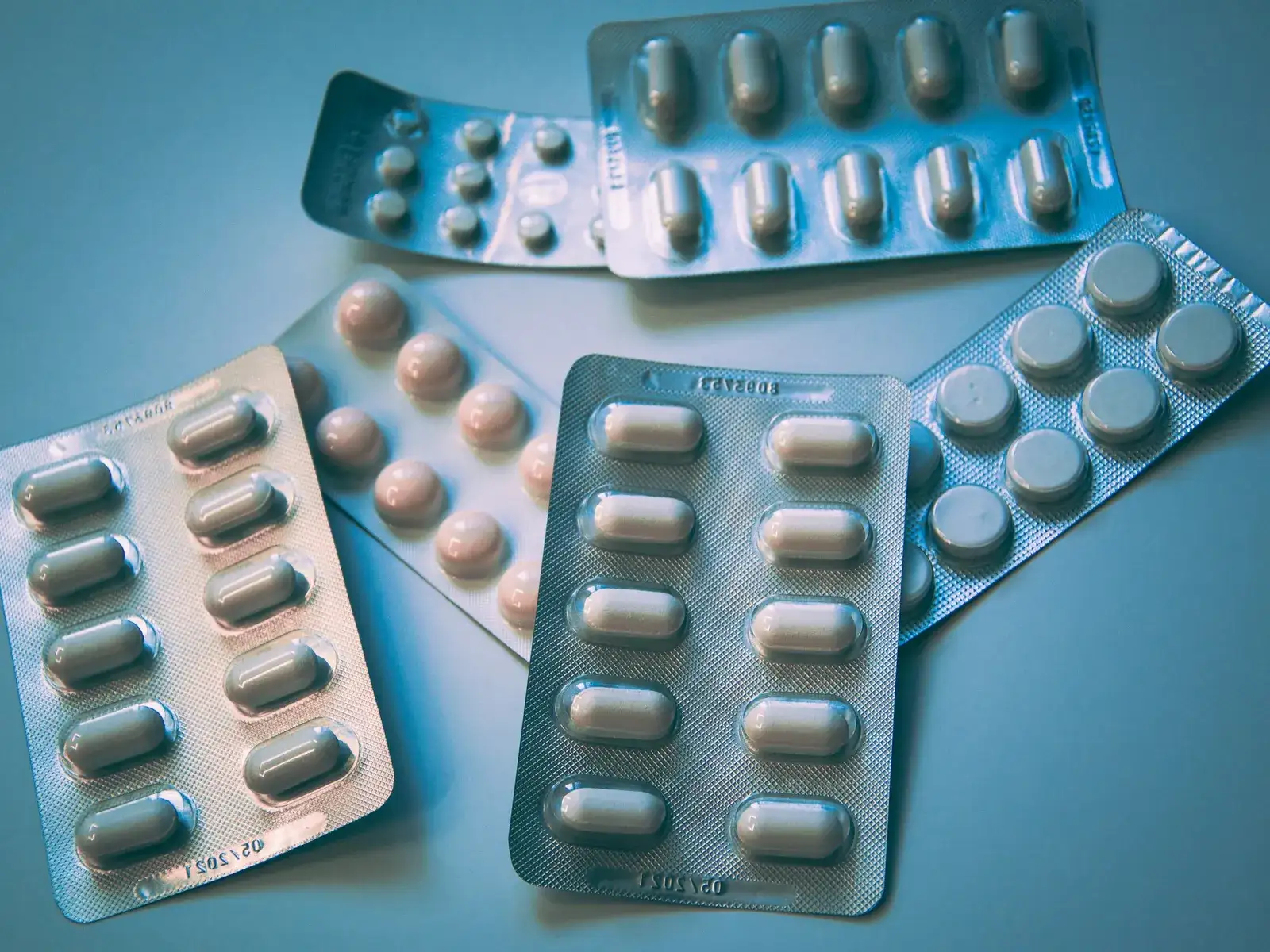
Imran is not a doctor, but for many of his customers he is the first person they consult. Nobody counts India’s pharmacies precisely. The Competition Commission of India put the number of private retail chemists at about nine lakh in 2021. A pooled analysis of Indian studies estimates that a little over half of people treat themselves, and in one survey in rural West Bengal, 59% of those who self-medicated got their medicine from a nearby shop. Before India sees a doctor, it often sees a counter.
Week two: the stockist
Imran’s stockist sends the van twice that week. Across the district, the same thing happens at dozens of shops. The stockist’s software records every invoice by product, pack and pin code. That record will eventually feed the sales audits that pharmaceutical companies buy each month. For now it is just a busy fortnight.
Week three: the district
At the district headquarters, a surveillance officer we will call Dr Meera reviews the weekly reports. A government hospital has sent its first lab-confirmed dengue cases. The private clinics where many of the early patients went are under no obligation to report, and most do not. She flags the cluster and asks for fogging. By the time the teams arrive, the fever has had three weeks’ start.
Week five: the review meeting
In Mumbai, a brand manager we will call Arjun opens the monthly sales audit. North Karnataka has beaten its target for fever and cough products. The review deck calls it a “seasonal tailwind”. Someone suggests increasing the supply allocation for next month. Nobody asks why so many people in one district needed paracetamol at once, because that is not the question the deck exists to answer.
Three people knew. Each held a third of the picture. Imran knew first but had no one to tell. Meera had the authority to act but heard late. Arjun had the clearest data, but it arrived monthly, it went to the wrong department, and it was framed as good news.
India already has an outbreak early-warning system. It reports to the sales team.
This is not a hypothetical
The pharmaceutical industry publishes its own version of this story every year, in the business pages. In August 2026, the market tracker Pharmarack reported that “acute therapies gain momentum as monsoon lifts IPM demand”. The categories it said were gaining were anti-bacterials, cough and cold medicines, analgesics and oral electrolytes. Read the other way round, that is an epidemiological bulletin about monsoon infections, fevers and diarrhoea, filed under market growth.
The ledger has recorded bigger events too. Researchers who analysed IQVIA sales data estimated that COVID-19 added 216.4 million excess doses of adult antibiotics in India, including 38 million excess doses of azithromycin, concentrated between June and September 2020. Dolo-650 alone sold about 350 crore tablets, worth ₹567 crore, between March 2020 and early 2022. India’s pandemic left a trail in paracetamol as clear as the one in its case counts.
And the idea has precedent. In the spring of 1993, pharmacies in Milwaukee sold out of antidiarrhoeal medicine early in what turned out to be a Cryptosporidium outbreak in the city’s water. An estimated 403,000 people fell ill, the largest waterborne outbreak documented in the United States, and the water was not recognised as the cause until at least two weeks after people began falling sick. Officials later concluded that medicine sales had been among the earliest signs. Milwaukee had its own Imrans, Meeras and Arjuns.
Seven ways India misses the fever
The question is why the three people in our story never connect. The answer is not that India lacks a surveillance system. It has a good one, which has improved a great deal. The answer is in how the system is built.
- 1It counts buildings, not people. Reporting is mandatory for public facilities and voluntary for private ones, where much of India first seeks care.
- 2It counts late. Reports move weekly, and an analysis of nearly 7,000 reported outbreaks found delayed reporting and missing follow-ups.
- 3It counts a fraction. One study estimated that true dengue cases ran at about 282 times the reported number.
- 4When it calls the chemist, it wants an informant. India’s COVID-era orders collected customers’ names and phone numbers, and punished shops that did not comply.
- 5The best data sits in a commercial silo. Monthly sales audits go to brand teams. No channel takes them to public health.
- 6It ignores the ledger’s other warning. The same data shows antibiotic misuse on a vast scale, and little is done with it.
- 7The money follows maps, not need. Health funding is planned annually and allocated by geography and habit, not by where illness is rising this month.
The last of these is the subject of part two of this series.
It counts buildings. The Integrated Disease Surveillance Programme began in 2004 with weekly reports from health workers, doctors and laboratories. In April 2021 it moved to the Integrated Health Information Platform, which tracked 33 diseases at launch, with near-real-time digital reporting. But private reporting is voluntary. A study of Maharashtra found that in 2012 only 50 private laboratories and 88 private hospitals reported to the programme, against 1,762 public laboratories and 2,303 public facilities, and only 18% of the private units reported consistently. We found no sign that retail pharmacies report at all.
It counts late, and it counts a fraction. An analysis of 6,948 outbreaks reported through the programme between 2018 and 2023 found delayed reporting and missing follow-up reports. And the numbers that do arrive are small next to reality. India recorded 289,235 dengue cases in 2023. A study of 2006 to 2012 estimated that clinically diagnosed cases ran at about 282 times the reported figure. Most people with a dengue-like fever never become a statistic. Many of them do become a sale.
It ignores the ledger’s other warning. A study using stockist data estimated that India consumed 5,071 million daily doses of antibiotics in 2019. Azithromycin was the most consumed molecule, and 47.1% of consumption was of formulations the central drug regulator had never approved. The same data that could flag a fever could flag misuse. In both cases it mostly flags a good quarter.
The time India called the chemist, and got it wrong
India has asked chemists for health data before. In 2020, as COVID-19 spread, several states told pharmacies to record everyone who bought medicine for fever, cough or cold. In Karnataka, about 13,000 chemists sent buyers’ names, addresses and phone numbers to the health department. In July 2020 the state revoked the licences of 110 pharmacies that had not sent in their sales data, 70 of them in Kalaburagi.
The instinct was right. The design was wrong. It treated the chemist as an informant on individual customers, which raised the cost of compliance for shops and the cost of buying medicine for anyone who feared being tracked. Reporting by The Wire has found TB patients hesitant to share personal details with pharmacists, citing privacy. A system that scares people away from the counter destroys the very signal it wants.
Tuberculosis also shows the better path. Since 2014, chemists have had to keep a register for an initial list of 46 drugs, including anti-TB medicines, and since 2018 those who dispense anti-TB drugs have had to notify those patients. In a 2016 study, researchers sent trained actors posing as patients to 622 pharmacies in Delhi, Mumbai and Patna. When the actor showed a confirmed TB diagnosis, 62% of interactions ended correctly, and not one pharmacy sold first-line TB drugs without a prescription. When the actor only described symptoms, just 13% did. Chemists respond well when the signal is clear and the ask is simple.
The sales data can carry the signal. A study published in December 2025 compared cough syrup sales with TB notifications across all 33 districts of Rajasthan. Districts that sold more cough syrup had more private-sector TB notifications (a correlation of 0.63) and more missed notifications (0.39). Missed private-sector cases ran at about seven times the reported number. In Pakistan’s Punjab province, a programme that mapped where anti-TB drugs were sold and enlisted 2,943 pharmacies raised notifications 34% over the baseline, against 8% in comparison districts. The data is not the problem. The relationship is.
The world has done it right
Other countries have built the channel Imran lacks, and tested it. In the United States, the University of Pittsburgh’s National Retail Data Monitor was receiving daily sales data from 10,000 stores by 2003, and from more than 15,000 by 2004. France’s Sentinelles network has worked with IQVIA (formerly IMS Health) since 1999, taking weekly dispensing data from about 14,000 pharmacies. Neither collects customers’ names. Both count products.
- 2.4 wksUnited StatesElectrolyte sales against children’s hospital diagnoses, six regions, 1998 to 2001. Sales detected 12 of 18 outbreaks first.
- 2.25 wksFranceNon-prescription drug sales against the doctors’ sentinel network for gastroenteritis, 2008 to 2013.
- 1–2 wksChinaFive over-the-counter categories against fever and respiratory cases in Pinghu, 2022 to 2024.
Each is a retrospective study in one setting. None of them was done in India.
Two weeks does not sound like much until you count what it buys. For dengue, it is the difference between clearing breeding sites before the peak and counting hospital beds after it. For diarrhoea, it is ORS in the house before a child is dehydrated rather than after.
What it means for you
This is not only a question for epidemiologists. Almost everyone in India is one of the people in this story.
- 1A patient or a parent. Your chemist is often your first doctor. A good system would count the paracetamol you buy, never track you for buying it. You should be able to ask for exactly that.
- 2A chemist. You are already the country’s most widespread health worker. The question is whether you are treated as a partner, with training and feedback, or as a suspect, with forms and penalties.
- 3A pharmaceutical leader. Outbreaks are also stock-outs and demand shocks. Sharing anonymised signals costs little, sharpens your own supply planning and is a more credible public contribution than another health-camp banner.
- 4A health official. This is a way into the private sector that does not require a single private doctor to fill in a form. The platform to receive it already exists.
- 5A funder, CSR head or NGO. A weekly signal of where illness is rising tells you where help is needed now, not where it was needed last year.
- 6A data scientist. This is a nowcasting and anomaly-detection problem. Demand planners solve versions of it every month.
Why it could go badly wrong
Every argument for sales surveillance should come with the story of Google Flu Trends. Google used search queries to estimate flu in the United States and for a while looked like the future. Then it overestimated flu in 100 of 108 weeks from August 2011, and at the peak of the 2012–13 season it predicted more than double the doctor visits recorded by the Centers for Disease Control and Prevention. The researchers who dissected it called the failure “big data hubris”: treating a large, convenient dataset as a substitute for measurement rather than a complement to it.
Medicine sales have their own traps, and marketers know them better than anyone. Promotions look like epidemics: in June 2015, New York City investigated a rise in antidiarrhoeal sales and concluded it probably reflected promotions, not illness. Panic looks like disease: pharmaceutical purchases in Germany jumped more than 30% in March 2020 as people stockpiled, then fell back. Some signals simply fail: in Japan, sales of cold medicines from about 1,100 pharmacies could not predict influenza in advance. And stockist data shows medicine moving from wholesalers to shops, not from shops to patients, so end-of-quarter stocking and price changes will move it for reasons that have nothing to do with health.
There is a quieter risk, too. Sales only see people who can buy. In our view, the poorest households, who may wait longest before spending on medicine, are the ones a sales signal is most likely to miss. A sales-based system has to sit alongside the reports of community health workers, not replace them.
Privacy is the last test. India’s Digital Personal Data Protection Act defines personal data as data about an individual who can be identified by it. A weekly count of fever medicine sold in a pin code, with no names attached, falls outside that definition. The Rules were notified on 13 November 2025, and most of their obligations take effect in May 2027. That gives India time to build the system around counts, not customers.
What should happen next
None of this needs new technology. One common assumption is that India’s GST system already captures every pharmacy sale. It does not: e-invoicing applies to business-to-business sales by firms with a turnover above ₹5 crore, so a chemist’s sale to a patient never reaches the portal. The data sits with stockists, sales-audit firms, pharmacy software vendors and the large chains. The work is in assembling it, reading it weekly rather than monthly, and connecting it to someone who can act.
- Three districts, one sales-audit firm, one state surveillance unit, one NGO
- Weekly counts of five tracer products: paracetamol, ORS, antidiarrhoeals, cough syrups, antimalarials
- Compare against the official platform for a full season, and publish the result either way
- A shared pool of anonymised counts by pin code and week
- Held by a neutral trustee, with counts and never names
- Designed for the data protection rules before they bite in May 2027
- Feed the signal into the national surveillance platform
- Agree in advance who acts when a district crosses a threshold
- Let funders commit money that moves on the signal
Two design rules matter more than the rest. First, model the baseline the way a demand planner does. A planner forecasting next month’s paracetamol sales already accounts for the monsoon, festival weeks, distributor schemes and competitor launches. The gap between that forecast and what actually sells is, for the company, a forecasting error. For a district health officer, an unexplained jump in fever and ORS sales is a reason to send someone to look. Second, never trust one signal. Sales should be checked against the official platform, laboratories and the wastewater network ICMR announced in 2025 for 50 cities. Sales data should start an investigation. It should never replace one.
The same five weeks, replayed
Now run the story again.
In week one, Imran’s billing software sends an anonymous weekly count of five products to a shared pool, as it does every week. No names, no phone numbers. Imran gets a short message back each month showing how his area compares with the district, which is more feedback than he has ever had from anyone in public health.
In week two, the model flags his pin code and three neighbouring ones. Fever and ORS sales are well above the forecast, and there is no promotion or price change to explain them. Dr Meera receives the alert on Tuesday. On Wednesday, community health workers start a fever survey. On Friday, the first samples go to the laboratory. The fogging teams are out a week earlier than before.
In week three, Arjun’s team sees the same signal, weeks before the monthly audit. They route extra ORS and paracetamol to the district so that the shops do not run out at the peak. For once, being early on demand is also being early on health.
And a foundation that committed money in advance to exactly this kind of signal releases funds for a testing camp and ORS kits in the affected wards, without waiting for a board meeting. How that last step could work is the subject of part two.
None of the three needed to be a hero. They just needed to be connected. India has nine lakh sentinels on its street corners. They have been reporting for decades. So far, only the sales team has been listening.
Next in this series. Part 2: Fund the fever. How CSR teams, foundations and NGOs could commit money that moves when illness rises, not a year later.
What would change our view
If a prospective trial in Indian districts found that sales signals, once adjusted for promotions and stocking, gave no useful lead over the Integrated Health Information Platform, or raised false alarms often enough to waste field teams’ time, the case for building this system would be weak. The evidence so far is retrospective and mostly from other countries. It needs testing here.
Sources
- BioSpectrum, “Acute therapies gain momentum as monsoon lifts IPM demand: Pharmarack” (August 2026) and “Anti-bacterials, cough and cold segments gain as monsoon lifts acute therapy demand” (August 2026)
- CDC, MMWR surveillance summary on waterborne outbreaks, 1993–1994; Mac Kenzie et al., “A massive outbreak in Milwaukee of Cryptosporidium infection transmitted through the public water supply”, New England Journal of Medicine (1994) and Das et al., MMWR supplement on over-the-counter sales in New York City (2005)
- Udayavani, “Govt revokes licenses of 110 K’taka pharmacies for withholding data” (July 2020) and Deccan Herald, “Pharmacy sales give clues about suspected Covid-19 cases” (2020)
- Competition Commission of India, Market study on the pharmaceutical sector in India (2021); ETV Bharat on AIOCD membership (May 2026); Millennium Post, Lok Sabha reply on registered pharmacists (February 2023)
- Pooled estimate of self-medication in India; Self-medication in rural Hooghly, International Journal of Community Medicine and Public Health; Kotwani et al., consumer interviews in Delhi, Pharmacy Practice (2021)
- Sulis et al., “Sales of antibiotics and hydroxychloroquine in India during the COVID-19 epidemic”, PLOS Medicine (2021)
- Business Today, Dolo-650 sales since March 2020 (February 2022)
- Koya et al., antibiotic consumption in India’s private sector, Lancet Regional Health – Southeast Asia (2022)
- Wagner et al., “Design of a National Retail Data Monitor for Public Health Surveillance”, JAMIA (2003) and MMWR supplement (2004)
- Hogan et al., “Detection of pediatric respiratory and diarrheal outbreaks from sales of over-the-counter electrolyte products”, JAMIA (2003)
- Pivette et al., drug sales and gastroenteritis surveillance in France, Epidemics (2014) and Réseau Sentinelles, use of IQVIA pharmacy data
- Li et al., “Monitoring OTC drug sales for early detection of respiratory infectious disease outbreaks”, Frontiers in Public Health (2025)
- Rajya Sabha answer on IDSP reporting (November 2014); WHO India on the launch of IHIP (April 2021); Rajya Sabha answer on IDSP coverage (March 2025)
- Phalkey et al., private-sector reporting to IDSP in Maharashtra
- Dengue cases and deaths in India, 2023 and 2024, from NCVBDC data and Shepard et al., the economic and disease burden of dengue in India, American Journal of Tropical Medicine and Hygiene (2014)
- Business Standard on Schedule H1 (2013) and Medical Dialogues on the 2018 TB notification order
- Satyanarayana et al., standardised patients in Indian pharmacies, Lancet Infectious Diseases (2016)
- “Can high private cough syrup sales act as a proxy for missed TB notifications in TB surveillance?”, Public Health Action (2025)
- Kirubi et al., mapping medicine sales to improve TB notifications in Punjab, Pakistan, BMC Health Services Research (2025)
- Lazer et al., “The Parable of Google Flu: Traps in Big Data Analysis”, Science (2014)
- New York City investigation of an antidiarrhoeal sales signal, Online Journal of Public Health Informatics (2016); Panic buying of medicines in Germany, March 2020; Japan over-the-counter cold medicine sales and influenza, MMWR (2005)
- SCC Online on the notification of the DPDP Rules, 2025
- EY on the ₹5 crore GST e-invoicing threshold (2023)
- Reporting on ICMR’s planned expansion of wastewater surveillance to 50 cities (August 2025)
- Kaviprawin et al., zoonotic outbreaks reported under IDSP, 2018–2023, Lancet Regional Health – Southeast Asia (2025)
- The Wire, “India cannot eliminate TB without addressing the taboo hurdle”
Facts are as reported by these sources. The opening and closing scenes are illustrative composites, and interpretation is RavenArc analysis. We know of no current arrangement in India under which commercial sales audits are shared with public health authorities.
RavenArc tests every decision against six questions. See the RavenArc Decision Method.
One considered idea, straight to your inbox.
A short note when we publish something worth a leader’s time. No noise, and you can leave with one click.